
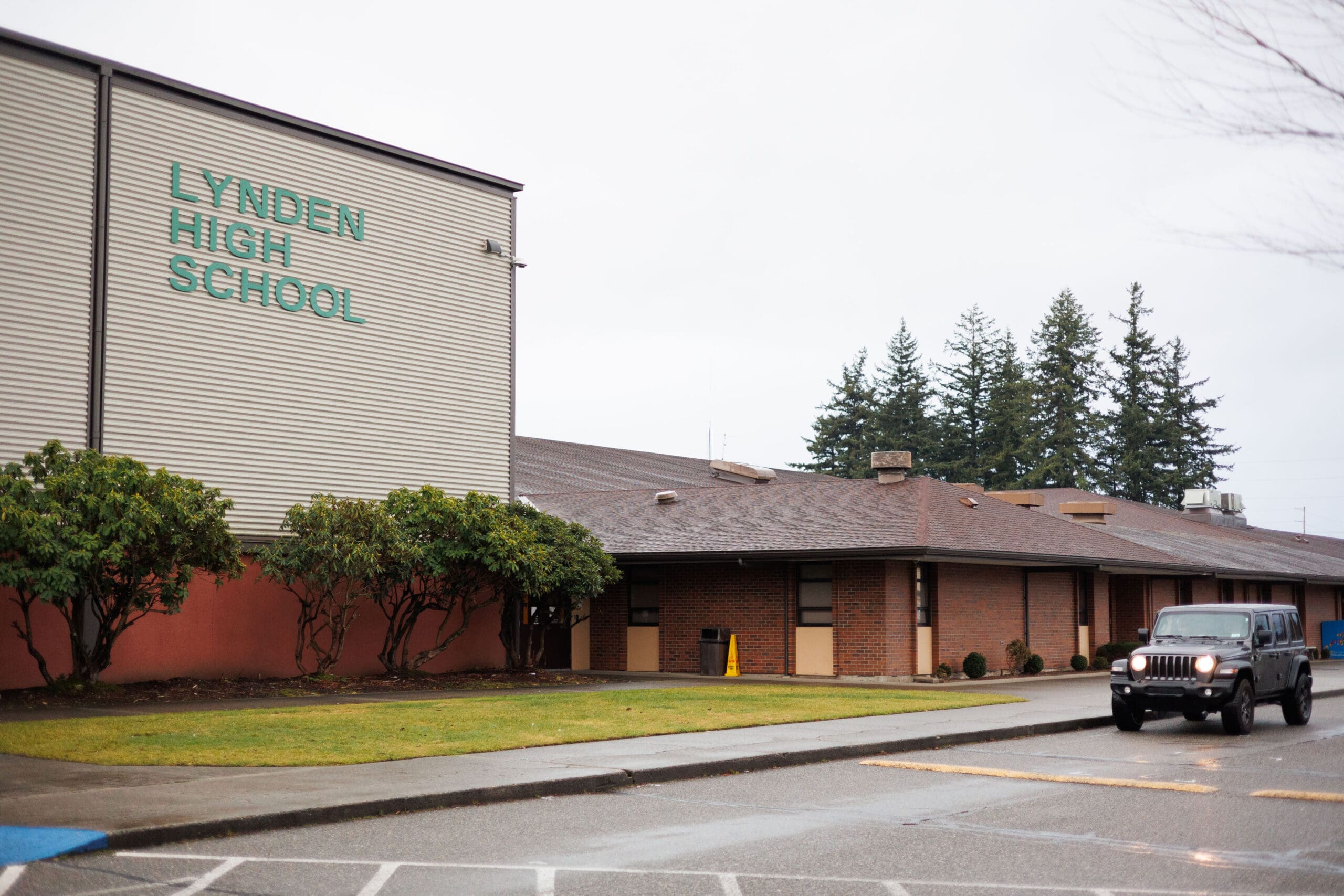
For the third time, Lynden is going back to voters to ask them to pass a bond to rebuild the district’s overcrowded high school in November.
Since the bond failed a second time in August 2024, the district convened a community committee to find ways to reduce the cost of the proposal and prioritize the projects.
The original proposal, first put to voters in January 2024, included a full rebuild of the high school plus expansion projects in both of the district’s elementary schools, totaling $157.5 million.
Now, the school board has landed on a $129 million bond proposal that focuses on the high school, with some additional funding included to improve performing arts, physical education and extracurricular facilities. It will ask voters for roughly $1.13 per $1,000 in assessed value in additional property tax over an estimated 22 years.
The latest high school proposal would include classroom space for 1,100 students, a slight decrease in square footage from the 2024 proposals to offset the escalation in cost since then. But the common spaces will be built for 1,250 students, with space set aside to build additional classroom space if needed.
The cost of replacing the high school is estimated at $78.9 million, with $13 million for site work. The remainder of the funds will go toward the Performing Arts Center on the high school campus ($10.9 million), a gym renovation ($5.4 million), a synthetic football field and a new track ($3.5 million), a grandstand extension and upgrade ($750,000), and field upgrades ($1 million).
An owner of a $650,000 home in the district would pay an additional $61.21 a month, or $735 a year, starting in 2027 if the measure passes.
When the high school opened in 1980, 350 students attended a school built for 500. Some additions allowed the school’s capacity to stretch to 740 students, but last academic year, there were 920 students.
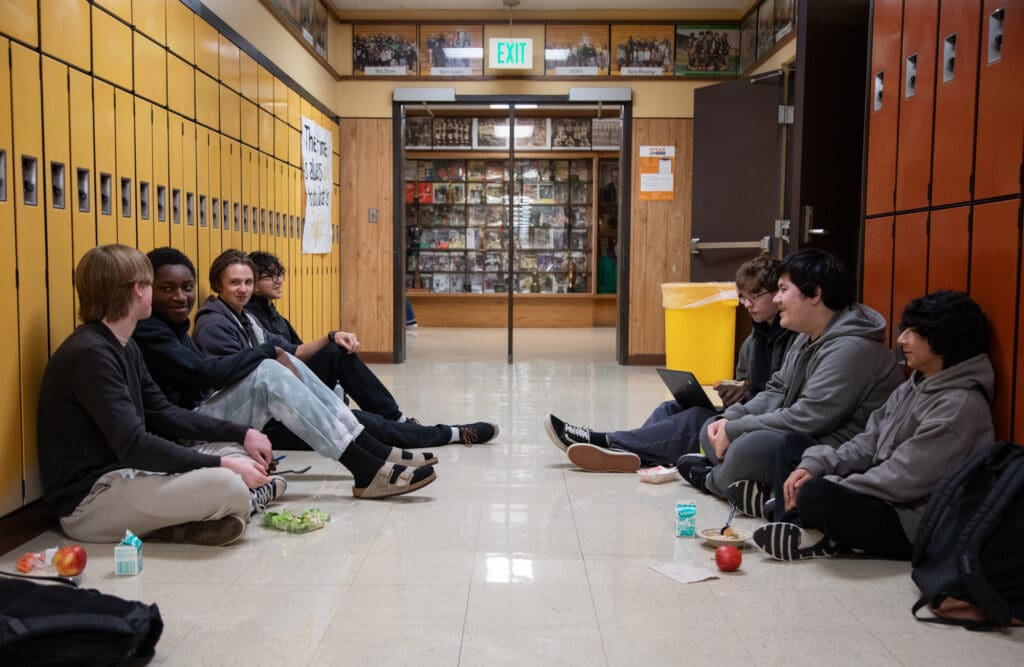
That results in students eating in the hallways because there isn’t enough room in the cafeteria, and hundreds of students sharing only six bathrooms.
In January 2024, Cascadia Daily News documented the school’s shortcomings.
Yellow power cords were snaking through classrooms, between aging tables and creaky chairs, to provide enough power for students’ laptops — an issue not considered when the school was built.
Old plumbing and electrical systems were failing, requiring ongoing replacement of pipes, outlets and fixtures, according to the district. Nine portable classrooms, plus 37 permanent classrooms, could not house the growing number of students.
There are also 70 points of entry to the facility due to its “California style” pod design, raising safety concerns.
Advocates for the bond have said it’s necessary to address aging systems and security concerns, and provide enough room for all the students attending Lynden High School.
“It is a need that the community’s going to have to respond to at some point,” Superintendent David VanderYacht said at the Thursday, July 17 Lynden School Board meeting. “I want this community’s experience of students to match our community’s value that we have for kids.”

School board members all voted to place the resolution on the ballot, but most had reservations about asking their community again for a tax increase.
“It’s somewhat of an agonizing decision, because we’re asking a lot of our voters and people in our community, but I think it’s the right thing to do,” said Jim Verburg, the school board president.
To pass, the bond needs to garner 60% approval. In August 2024, only 46% of voters approved of the plan (down from 51% in the first attempt).
It took Lynden four attempts to pass the bond for Lynden Middle School in 2015.
As for the remaining projects that were included in earlier versions of the bond, the district is finding other ways to pay for needed upgrades. Administrators pulled about $1 million from the general fund to pay for some maintenance at the elementary schools and received another $1 million in grant money to redo the lighting, heating and ventilation at Bernice Vossbeck Elementary.
The district also refinanced existing debt to save taxpayers $1.3 million over 10 years, VanderYacht said. They’ve also pursued collecting impact fees, which can provide public institutions extra funding to handle the demands on public facilities driven by new growth. The district plans to use those fees to add classroom space to the new high school as needed over the next few decades.
Charlotte Alden is CDN’s general assignment/enterprise reporter; reach her at charlottealden@cascadiadaily.com; 360-922-3090 ext. 123.
Leave a Reply